
Basement insulation in Santa Barbara CA - a basement that feels part of the house
Cold floors upstairs or a chilly, damp room downstairs? We insulate your basement walls with a method that fits the space, finished or bare.
- Fully licensed and insured.
- Free in-person estimates.
- We reply within 1 business day.
What does it take to insulate a basement in Santa Barbara?
Basement insulation in Santa Barbara means adding spray foam, rigid foam panels, batts or blown-in insulation to your basement walls, usually from the inside, so the basement stops pulling down the temperature of the rooms above it.
Most basement calls start with cold floors upstairs or a room downstairs nobody wants to use. The price moves with how much wall there is, whether the basement is finished or bare, which method fits and whether foam needs a fire-rated cover over it. The schedule turns on anything that has to be fixed first, like water coming in, and on whether the job needs a city permit, which we apply for when it does. If part of the house sits over a crawl space instead, that's crawl space insulation, a different job. The plan I write up after looking at your basement gives you your own figure.
How do you know your basement needs insulation?
Cold floors upstairs
If the floors over the basement stay cold all winter, the basement walls are usually bare concrete letting heat slip out to the ground. Every winter it waits, you pay for that on the power bill.
Damp or musty walls
A musty smell, damp patches or white crust on the concrete usually means water is getting in. Insulation over that only traps it, so it gets fixed first, and the longer it sits the more it reaches framing and stored boxes.
A room you avoid
A basement room that feels chilly even with the heat on usually has little or nothing behind the drywall. Until that changes, you're paying to heat a room you don't use.
Often paired with basement insulation
Closed-cell foam insulation
The dense foam to ask about when insulation has to sit right against concrete that can get damp.
Open-cell foam insulation
A lighter, lower-cost foam for framed walls and spots where the moisture side is already handled.
Basement insulation, done in the right order
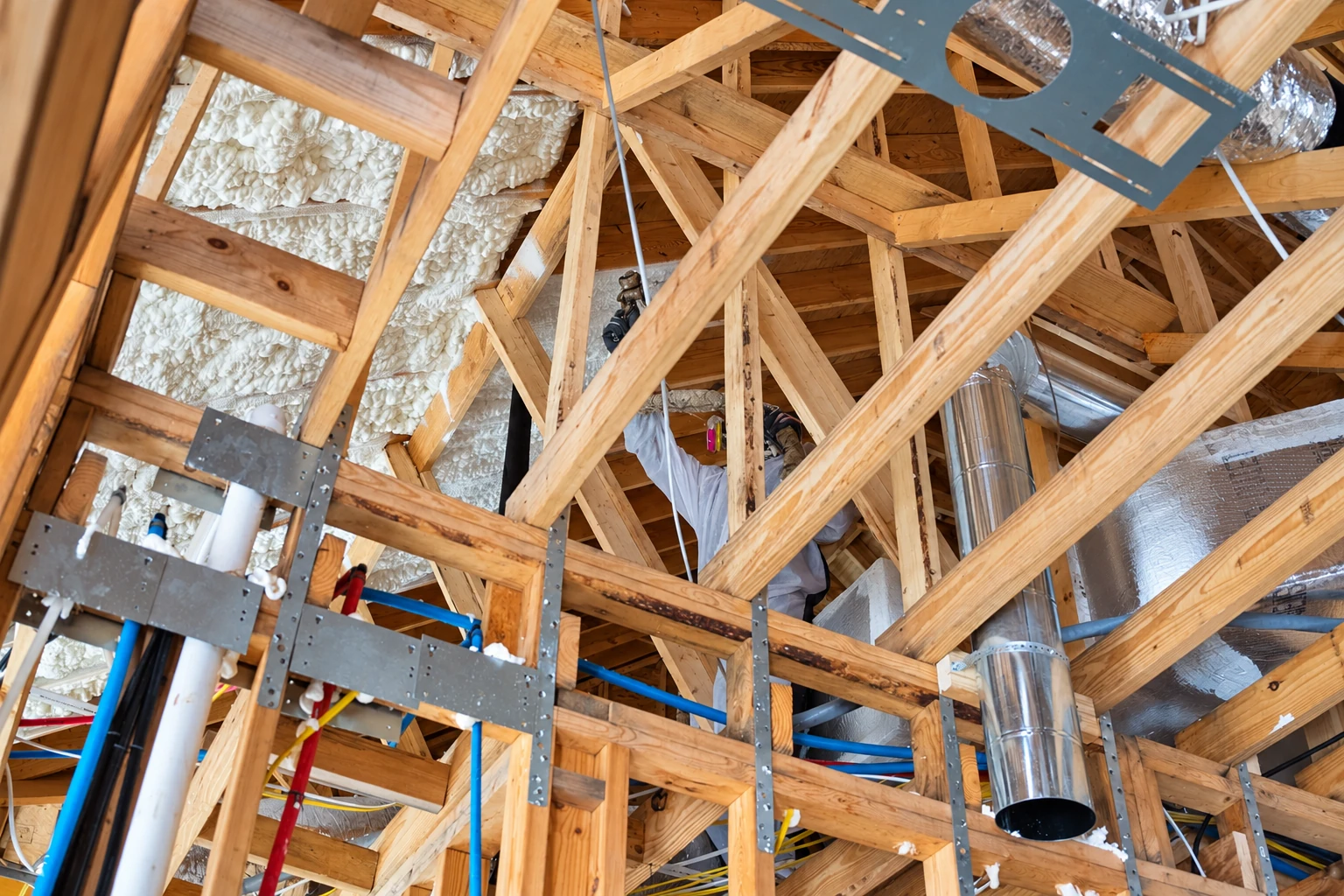
I start by asking whether your basement is finished or bare, then I check for water coming in, because insulation laid over a leak just has to come back out. Anything like that gets fixed before we go further. Then we pick the method that fits the walls you have. If any spray foam or rigid foam would be left showing, a fire-rated cover goes into the plan and the price from the start, because exposed foam that isn't fire-rated has to be covered with an ignition barrier, a layer that slows fire, or a fire-rated wall like drywall. Our installers then put it in wall by wall and clean up before I come back.
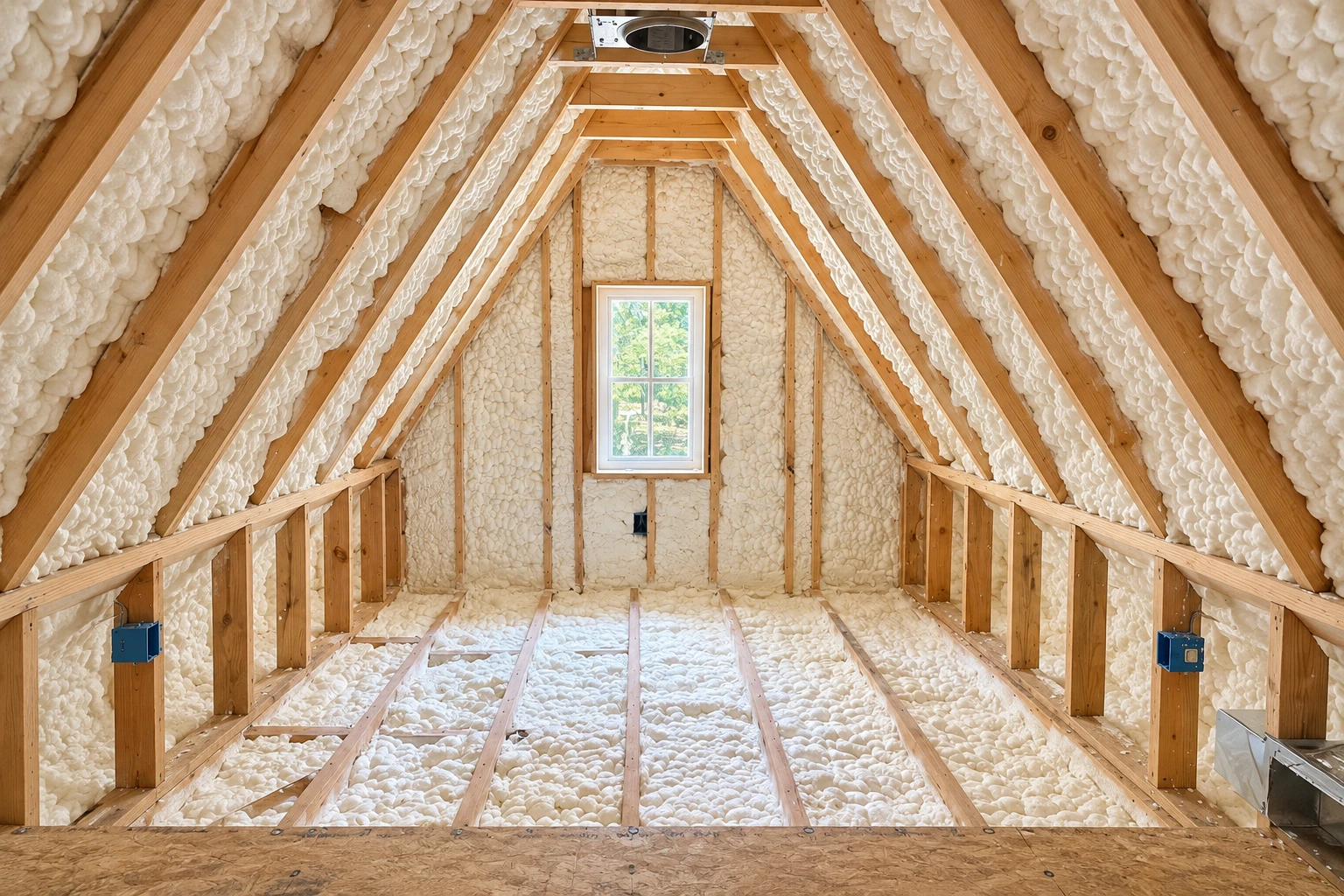
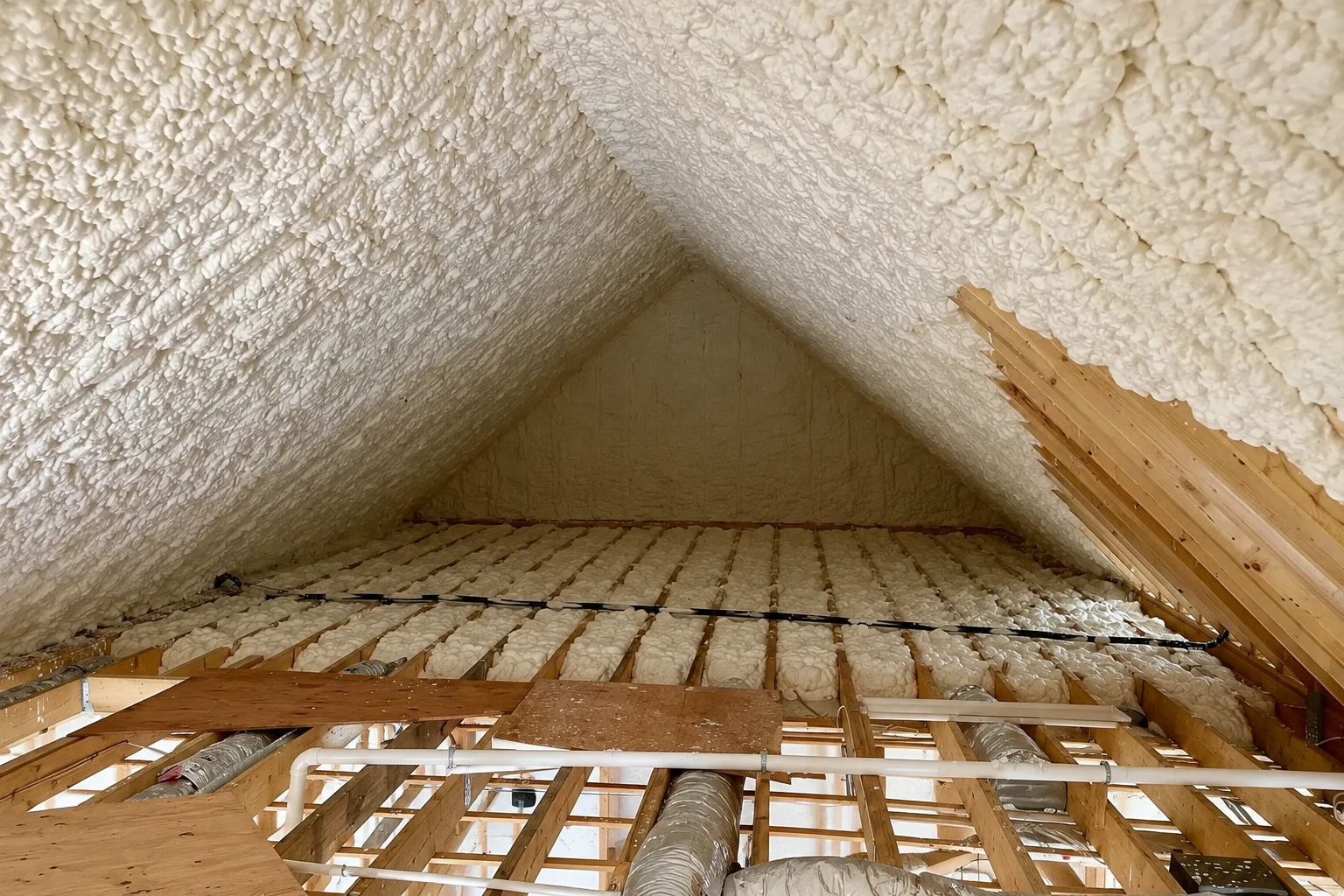
Against bare concrete, the kind of foam matters most. Closed-cell foam insulation is dense foam that blocks moisture, so it's the one we usually put straight onto a foundation wall. Open-cell foam insulation is softer and costs less, which suits framed walls away from the damp side.
Foam right on bare walls
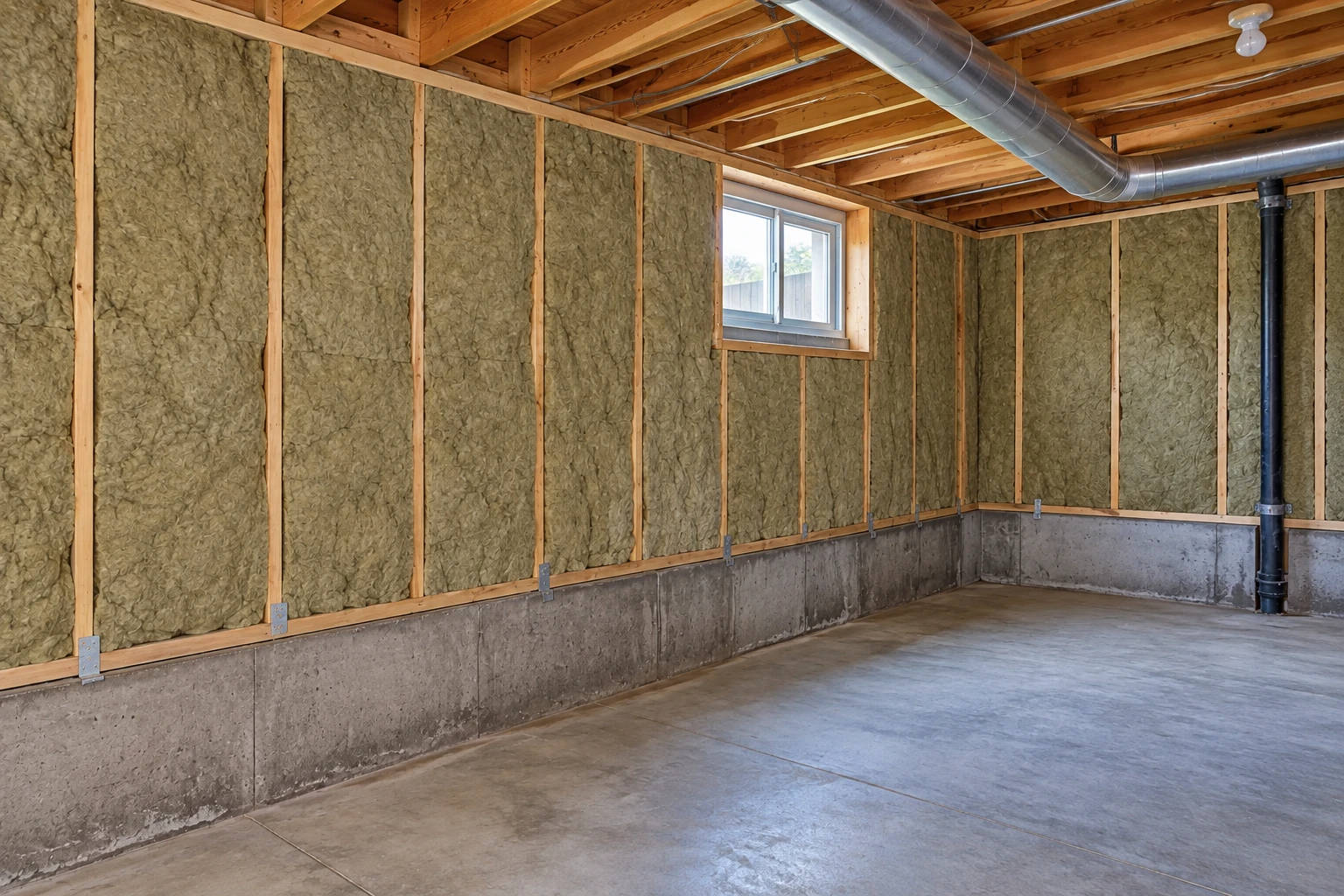
Spray foam or rigid foam panels go straight onto the concrete, which suits an unfinished basement where you want insulation without building a new wall. Foam costs more, and you should count on the fire-rated cover whenever it stays exposed.
Framed wall with batts
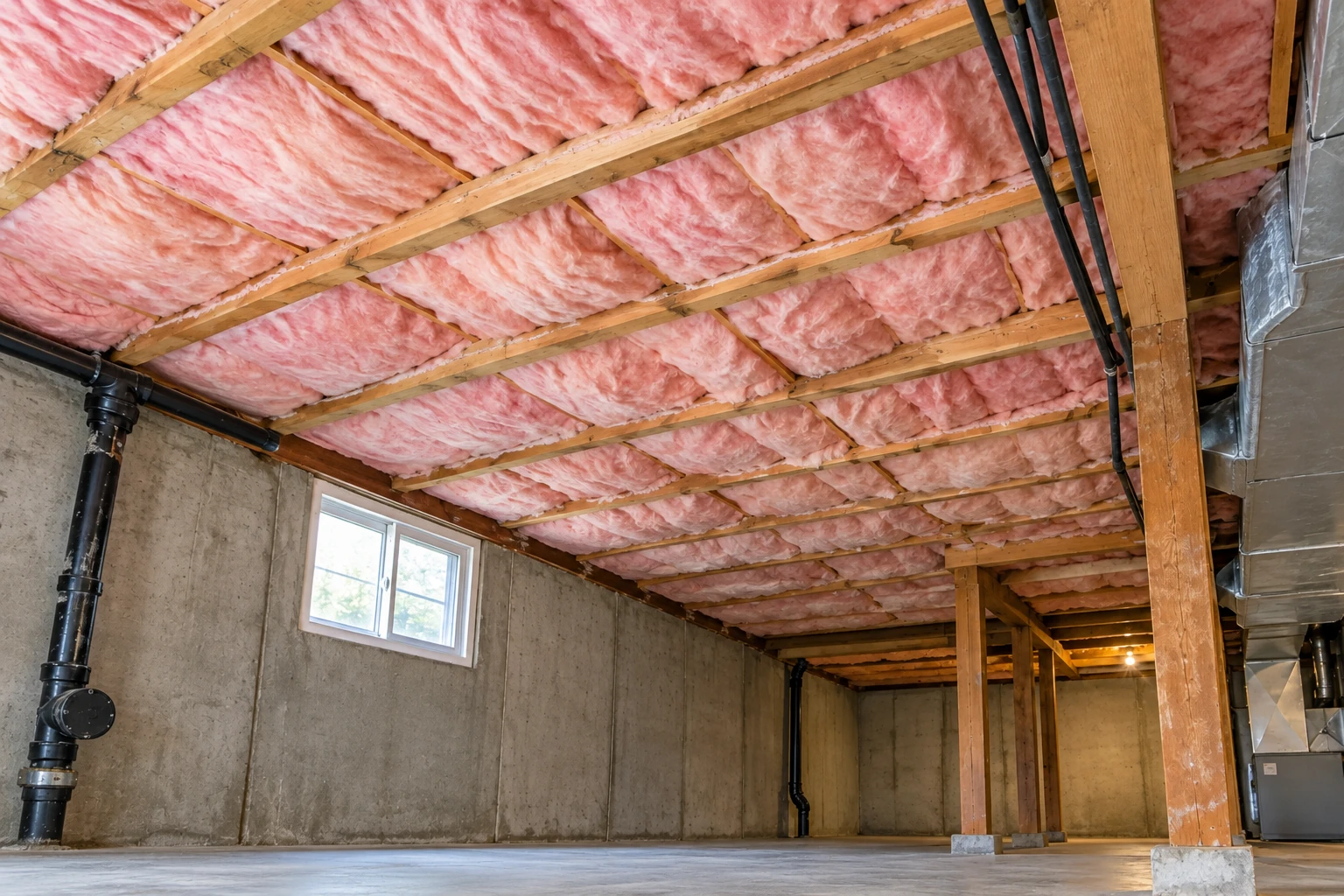
We build a stud wall inside the foundation, fill it with batts or blown-in insulation and finish it with drywall. If you're turning a bare basement into a room anyway, this is usually the better value, because you'd be paying for the wall and drywall either way.
Get a basement insulation plan for your house
Send the form and we reply within one business day to set a time for me to come look. The estimate is free and in person, with no pressure to book, and calling (805) 284-9538 works too.
Call (805) 284-9538Why Santa Barbara homeowners call us about their basements
I do the estimate myself
I come out for the first look and the estimate, and our installers do the work. Then I come back to walk the finished basement with you, so the person who planned it is the one who checks it.
Jobs done in order since 2017
We've been in business since 2017, and people know us for planning each job in the right order. In a basement that means water and other problems get sorted before any insulation goes up.
Licensed and insured in California
We're fully licensed and insured. The state's contractor license board only lets an unlicensed person take on work under $1,000 when it needs no permit and they hire no one, so ask anyone you're comparing whether they hold a license.
We sort out your permit office
We're based in Santa Barbara and work across the cities around it, including Goleta, Montecito, Carpinteria, Isla Vista and Ventura, so before we book we check which office covers your address, whether that's a city, the county or the university. When a permit is needed, we apply for it, set up the inspections and tell you how they fit your schedule.
In a basement, the first thing to know is whether water is getting in, so tell us what you've noticed down there and I'll plan the visit around it.
What happens after you call about your basement
Call or send the form
You call (805) 284-9538 or send the form, and we set a time for me to come out. Tell us what you've noticed, like cold floors or damp spots, so I know where to look first.
I look and write a plan
I check the walls for water coming in and anything else that has to be fixed first, and I note whether a gas water heater or furnace sits down there. You get a plan that lists those fixes, the method I'd use and the estimate, so you know what you're paying for before you decide.
Permits and booking in order
Once you say yes, we sort out any permit and book the work in the right order. On a job with a City of Santa Barbara permit, the inspector has to approve the insulation before it's covered, so the walls stay open until then.
Install and walk through
Our installers put the insulation in and clean up. Then I come back and walk the finished job with you, wall by wall.
Common questions
How much does basement insulation cost in Santa Barbara?
Across the US, insulating a basement usually costs about $4.40 to $6.40 per square foot, which is a national market figure and not our price. Your number moves with the wall area, the method, any repairs that come first and the fire-rated cover that exposed foam needs. The estimate gives you your own figure.
Should I insulate the basement walls or the basement ceiling?
The walls, in most homes. An older federal fact sheet points out that a basement, even one you don't heat or cool, is tied more closely to the rooms above it than to the outside, so insulating its walls makes more sense than insulating its ceiling.
What is the best way to insulate a finished basement without tearing out the walls?
Drill small holes in the drywall and blow insulation into the wall cavities, so the finished walls stay up. Blown-in insulation is loose fill sent through a hose, and it fills the space behind the drywall before the holes get patched. I still check for water first, because it's harder to spot behind finished walls.
Do I need a permit for basement insulation in Santa Barbara?
It may need one, and the City of Santa Barbara is the office that decides. The city issues building permits and generally requires one when you alter, improve, repair or convert a building, and California's Energy Code also sets efficiency rules for changes to existing homes. The city encourages a call to (805) 564-5485 or an email to CDBuildingCode@SantaBarbaraCA.gov before applying, and when a permit is needed, we handle the application.
How do I keep moisture from getting trapped behind basement insulation?
Keep plastic sheeting and foil facings off the room side of fiber insulation like fiberglass batts, because in a basement they can trap moisture inside the wall. Federal guidance calls for kraft-faced batts, which have a paper facing, or latex paint on the drywall instead. Any water coming in has to be fixed before the insulation goes up.
Is it safe to insulate a basement with a gas water heater or furnace in it?
It can be, but a federal checklist calls for a combustion safety test first if a natural-draft water heater or furnace, the kind that vents up a flue on its own draft, sits in the basement. The test helps make sure fumes don't back-draft or spill into your house.
Get your basement walls looked at
Call (805) 284-9538, email sales@insulationsantabarbara.com or send the form, and let us know whether the basement is finished or bare and whether a natural-draft water heater or furnace is down there, so I come ready for it.