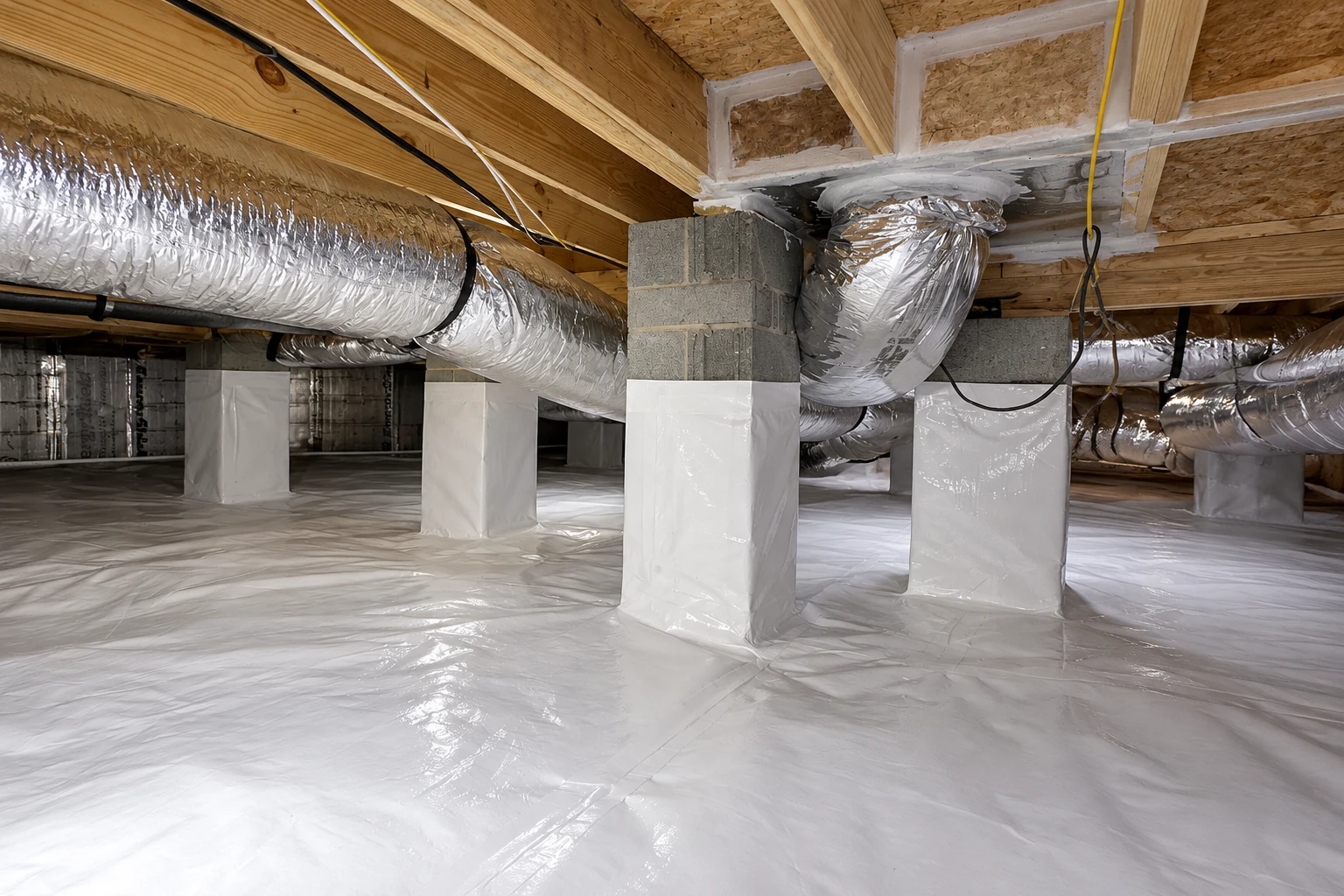
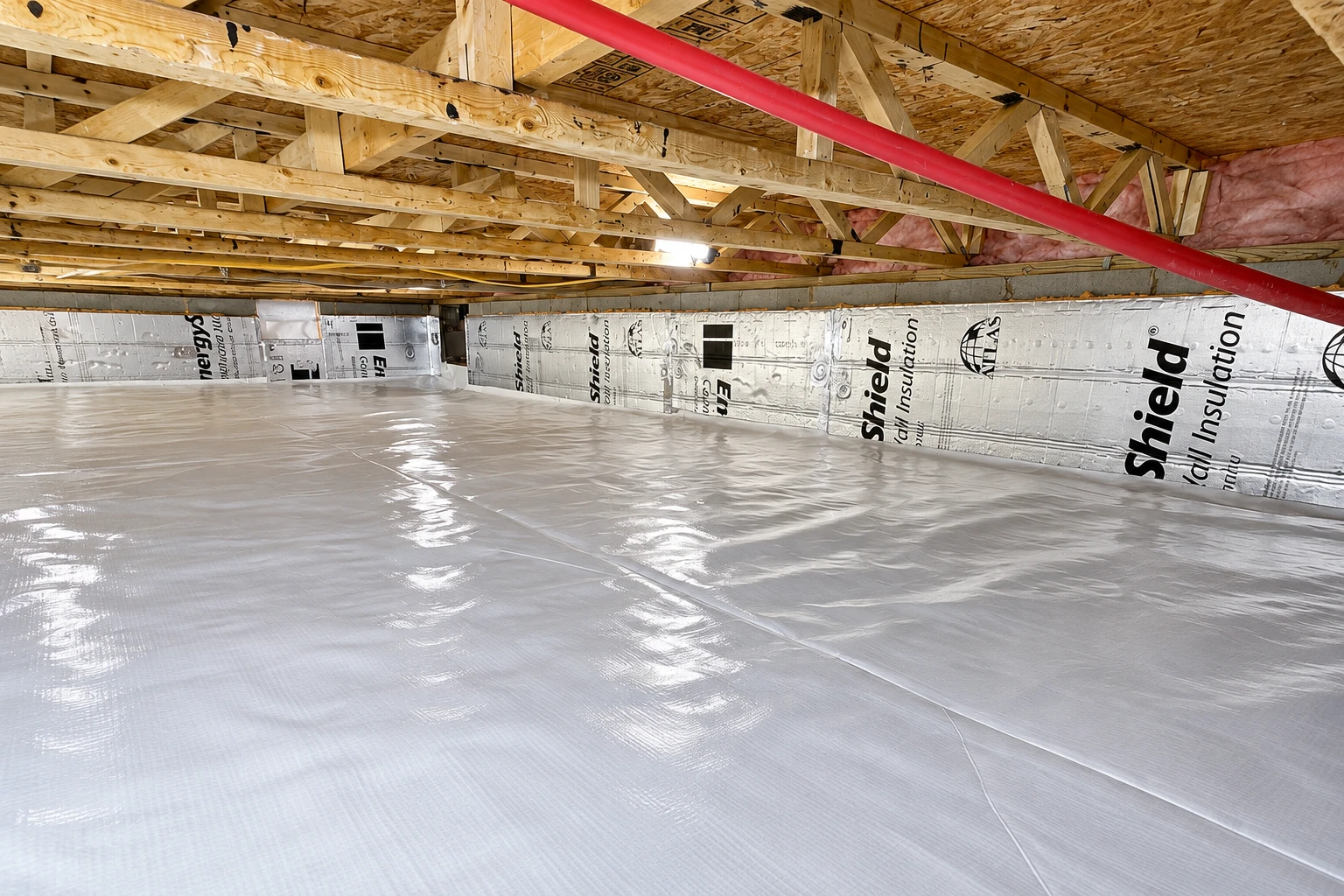
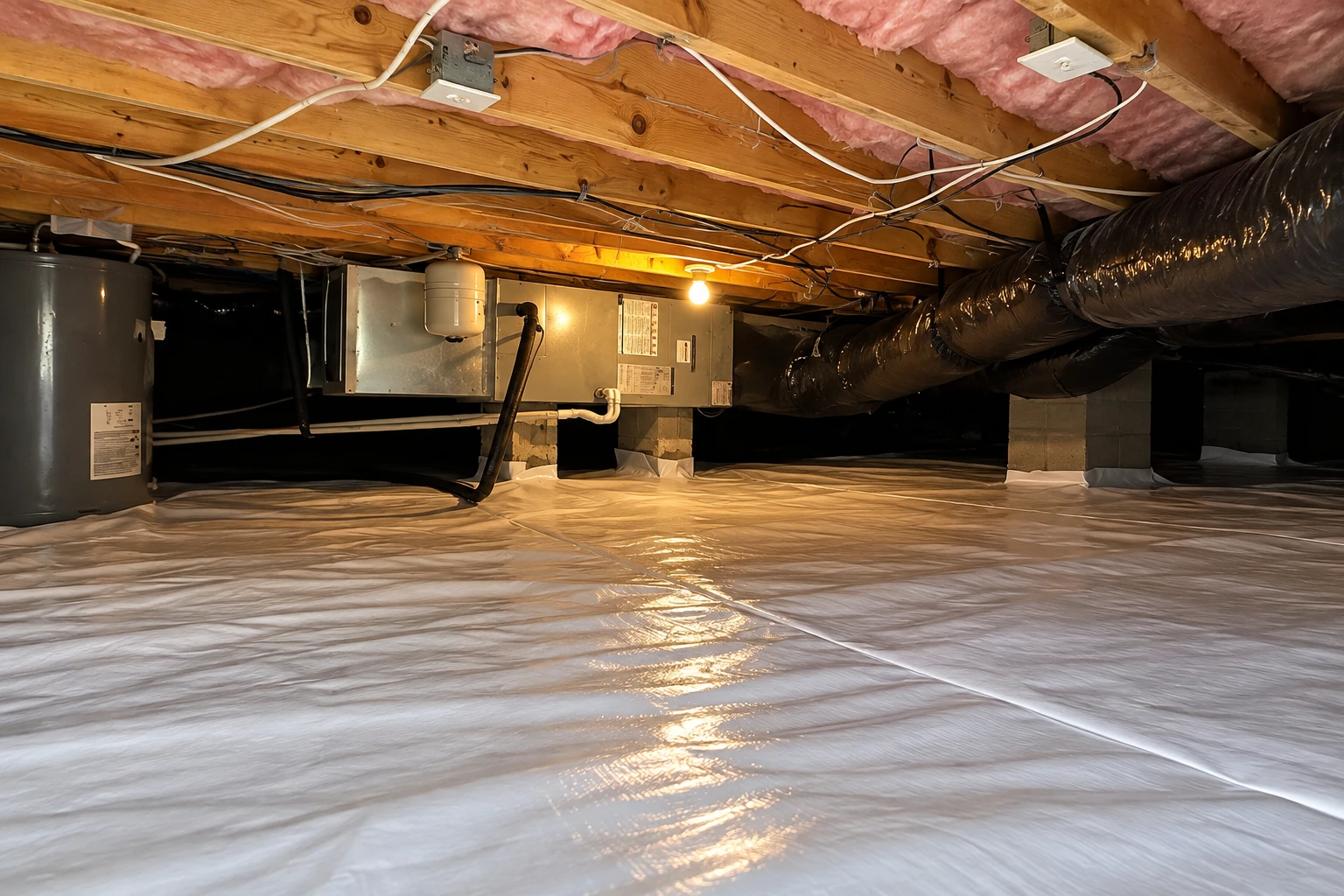
Crawl space vapor barrier in Santa Barbara CA - plastic run up the walls and piers
Musty smell or bare, damp dirt under the house? We find where water gets in, then cover the ground and run plastic up the walls.
- Fully licensed and insured.
- Free in-person estimates.
- We reply within 1 business day.
Does my crawl space need a vapor barrier?
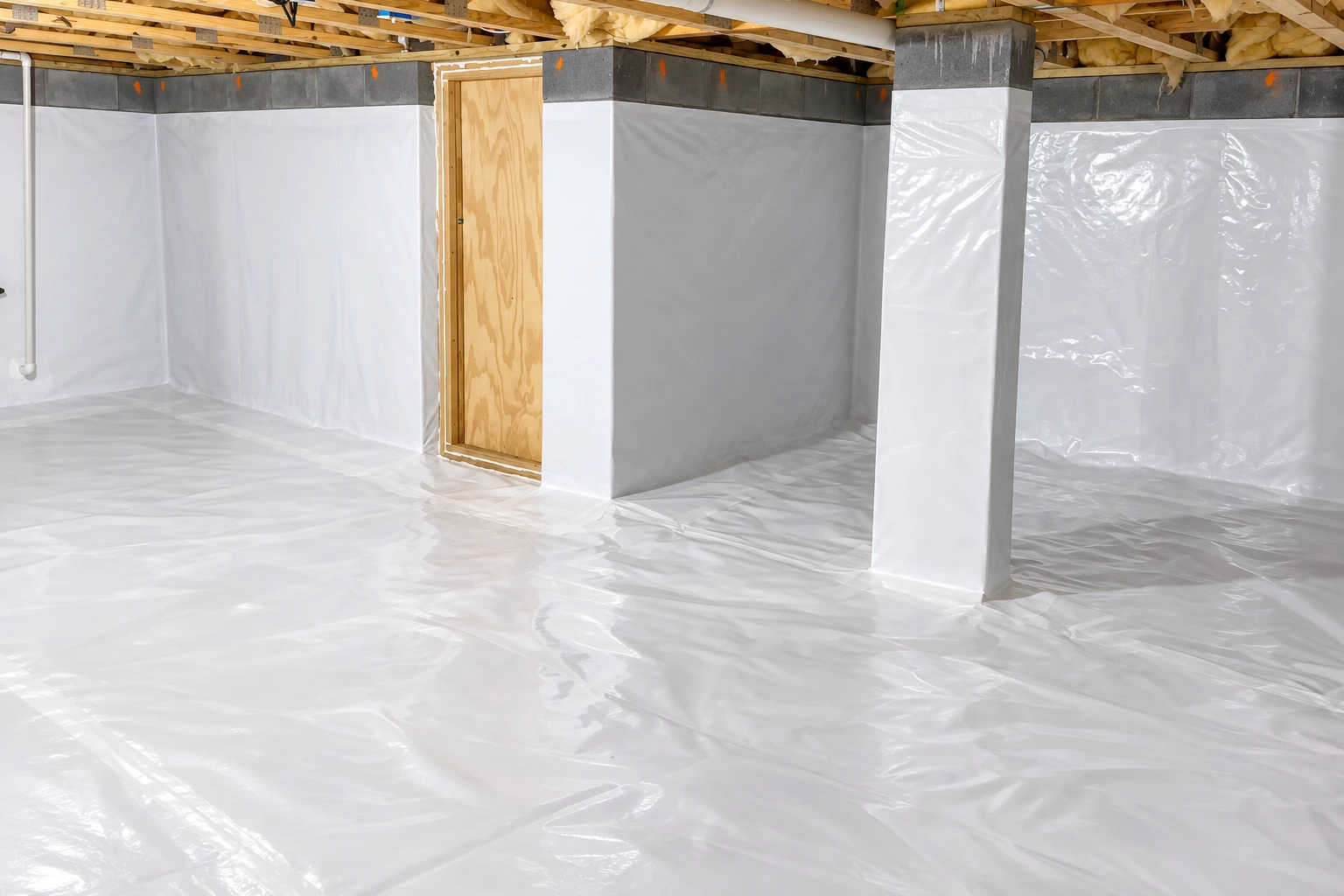
A crawl space vapor barrier in Santa Barbara is heavy plastic laid over the bare dirt under your house and run up the walls and piers, so damp from the soil stays down instead of rising into the framing and the rooms above.
Most people call after they notice a musty smell in the house or open the access hatch and find bare dirt or a torn old sheet. The price mostly depends on how big the crawl space is, how much has to be cleared out, how tight it is to work in and whether you keep the vents open or have the space sealed. The schedule depends on any water problem that has to be fixed first and on whether your address needs a permit. My estimate lays out what has to happen first and what the job costs, and if the floors above feel cold, I can price crawl space insulation on the same visit.
What does a crawl space that needs a vapor barrier look like?
A musty smell inside
The house smells damp or stale, often worst in the rooms right over the crawl space. That usually means moist air from bare soil is drifting up through the floor, and the longer it goes on, the more the damp settles into the framing and the smell settles into the house.
Bare dirt or torn plastic
You open the hatch and see dirt, or a thin sheet that's ripped, bunched up or missing where someone crawled through. Uncovered ground gives off moisture every day, so a cover with gaps is only doing part of its job while you keep paying for the damp.
Wet wood or standing water
Dark stains on the beams, rusty nails or puddles after rain or a sprinkler cycle mean water is getting in, which is more than damp coming up from the soil. Waiting gives the wood time to soften and draws in pests that like it wet.
Work that often goes with it
Vapor barrier installation
When damp shows up somewhere other than the dirt under the house, a barrier in the walls or ceilings may be the next fix.
Attic air sealing
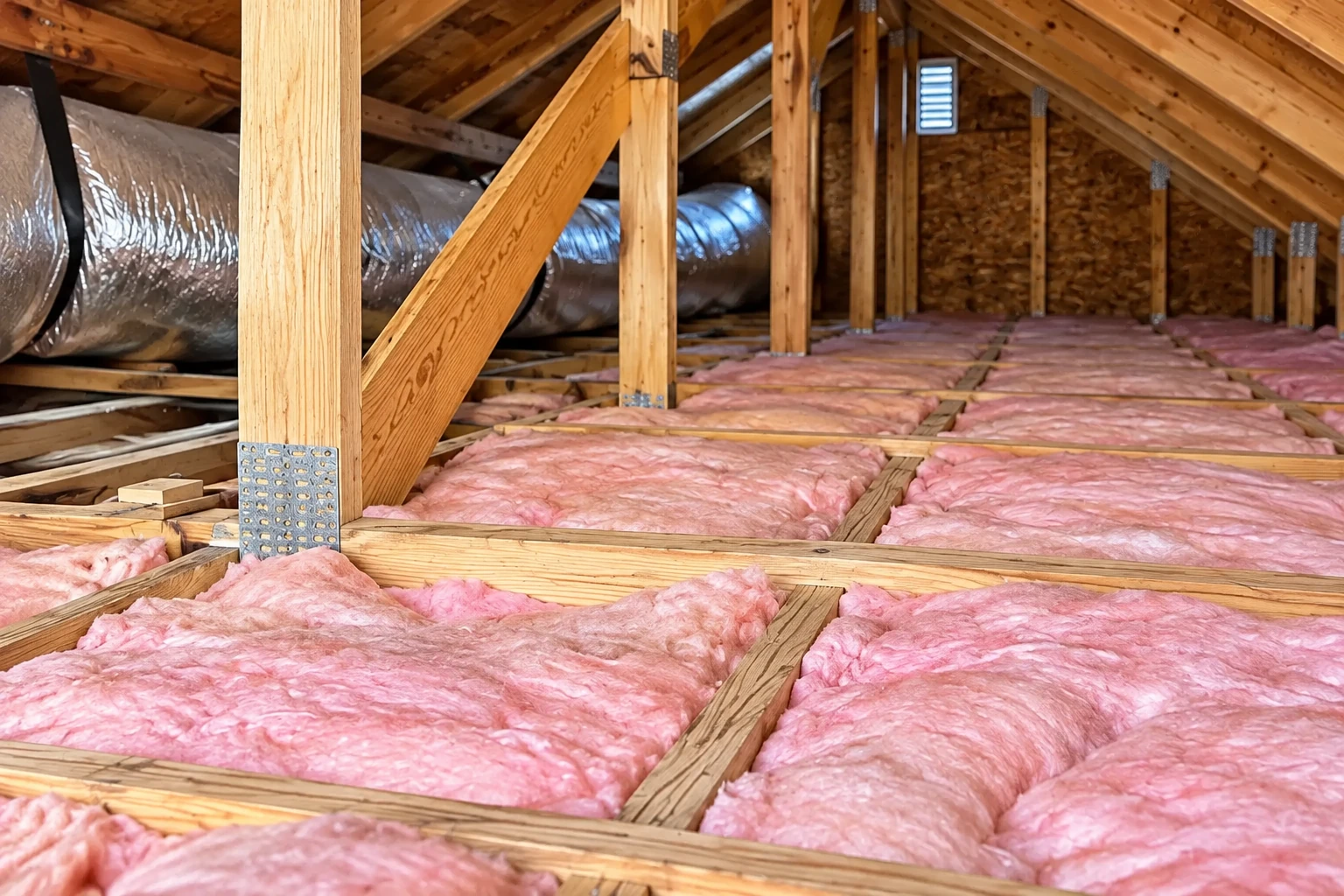
Slowing the draft at the top of the house means less damp air gets drawn up from below.
How we put in a crawl space vapor barrier
We start by clearing out what's in the way, like stored boxes, scrap wood and any torn old plastic, because the new cover has to reach as much of the ground as we can get to. Then we lay the plastic across the dirt, overlap the seams and run it up the foundation walls and around each pier, so soil damp can't slip in at the edges. If water is getting in, I show you where it's coming from before any plastic goes down, because a cover laid over a wet spot only hides the problem until it has to come back up.
Some houses need more than a ground cover. When moisture is showing up in walls or other parts of the house, our vapor barrier installation work covers barriers beyond the crawl space floor. Warm air leaking out through gaps up top pulls air from under the house up through your rooms, so attic air sealing, which closes those gaps before any insulation goes in, often pairs well with this job.
Ground cover with vents open
This suits most older vented crawl spaces where the goal is keeping soil damp out, and it's the simpler, lower-cost job. It's the one I usually recommend unless ductwork or a furnace lives under the floor.
Sealed crawl space
The seams and the spots where pipes pass through get sealed and the vents get closed, which suits houses with ducts or equipment down there. It costs more and takes more planning around everything already in the space.
Get a plan and a free estimate for your crawl space
We'll reply within one business day to set a time for me to see your crawl space. The estimate is free with no pressure to book, or call (805) 284-9538.
Call (805) 284-9538Why Santa Barbara homeowners call Santa Barbara Insulation & Spray Foam for crawl spaces
I do the estimate myself
I come out for the first look and the estimate, our installers do the work, and I come back to walk the finished crawl space with you. The person who planned the job is the one who checks it, and you can ask your questions face to face.
In business since 2017
We started this business in Santa Barbara in 2017, and people know us for doing each job in the right order. Under a house, that means any water gets sorted before the plastic goes down, so nothing has to come back out.
Licensed and insured for the job
We're fully licensed and insured. That matters because the state only lets someone without a license take on work up to $1,000, and only when the job needs no permit and they have no one working for them on it.
When you're ready, call (805) 284-9538 or send us a note about your crawl space, and I'll set a time to come look.
What happens after you call about your crawl space?
Call or send the form
Call (805) 284-9538 or send the form, and we'll set a time for me to come out. We pick up early and into the evening, weekends included.
I look under the house
I go into the crawl space, measure it and note anything that has to be fixed first, like water getting in. You get a written plan in the order the work should happen, with the price, so you know the cost before you decide anything.
We line up permit and crew
Once you say yes, we sort out any permit and book the work in the right order, so a water fix comes before the plastic. If an inspection is needed, I tell you how it fits your schedule.
We walk the finished job
When our installers are done, I go through the crawl space with you. You see how the cover runs up the walls and piers and can ask anything before we call it finished.
Common questions
How much does a crawl space vapor barrier cost in Santa Barbara?
A basic crawl space vapor barrier, meaning plastic over the dirt floor only, usually runs about $0.50 to $1.50 per square foot across the US. That's a national figure, not our price, and running the plastic up walls and piers, clearing the space, fixing water or sealing the crawl space all add to it. I'll give you your own number once I've been under the house.
Should my crawl space be sealed, or is a vapor barrier enough?
For most vented crawl spaces, the ground cover alone is enough. National guidance says the cover goes in either way, and it calls for sealing the seams and the spots where pipes pass through only when the space is closed off from outside air. It also warns that just blocking the vents can raise moisture and can be deadly if a gas furnace or water heater down there vents naturally, so sealing takes a bigger plan than shutting the vents.
Do I need a permit for a crawl space vapor barrier in Santa Barbara?
It can need one. The City of Santa Barbara generally requires a building permit application when you alter, repair, replace or improve a building, though its chief building official can exempt some minor work. Before we book, we check whether your address falls under the city, the county or the university, and when a permit is needed we apply for it and set up the inspections.
What causes moisture in a crawl space?
In a vented crawl space, most of the moisture comes from water seeping in from the yard, usually because the ground slopes toward the house, there's no drainage around the foundation or the watering soaks the beds along it. Plastic handles damp coming up from the soil but can't stop water running in from outside, so those sources go into the plan too, and they have to be handled before anyone seals and insulates the walls.
How do I get my crawl space ready for a vapor barrier?
Clear out anything you keep stored down there and make sure we can reach the access hatch, because the plastic needs to cover as much of the ground as possible. National guidance calls for checking the space for water getting in, damp and pest damage before work starts, and I do that on my first visit so you get a list of anything to fix first.
How do I keep a crawl space vapor barrier from getting torn?
Ask for a vinyl runner or an extra layer of plastic along the paths people use, like the route to a furnace or water heater. National guidance suggests this for any area that gets foot traffic, since that's where knees and tools wear through first.
Book a look under your house
When you call or send the form, mention the rough size of your crawl space, whether it has vents, any gas equipment down there and any signs of water, so I come out ready to plan.