
Closed-cell foam insulation in Santa Barbara CA - a dense seal that won't soak up water
Drafty room over the garage or a damp crawl space? We spray a rigid foam that seals the gaps and holds back moisture.
- Fully licensed and insured.
- Free in-person estimates.
- We reply within 1 business day.
Is closed-cell foam the right insulation for your Santa Barbara home?
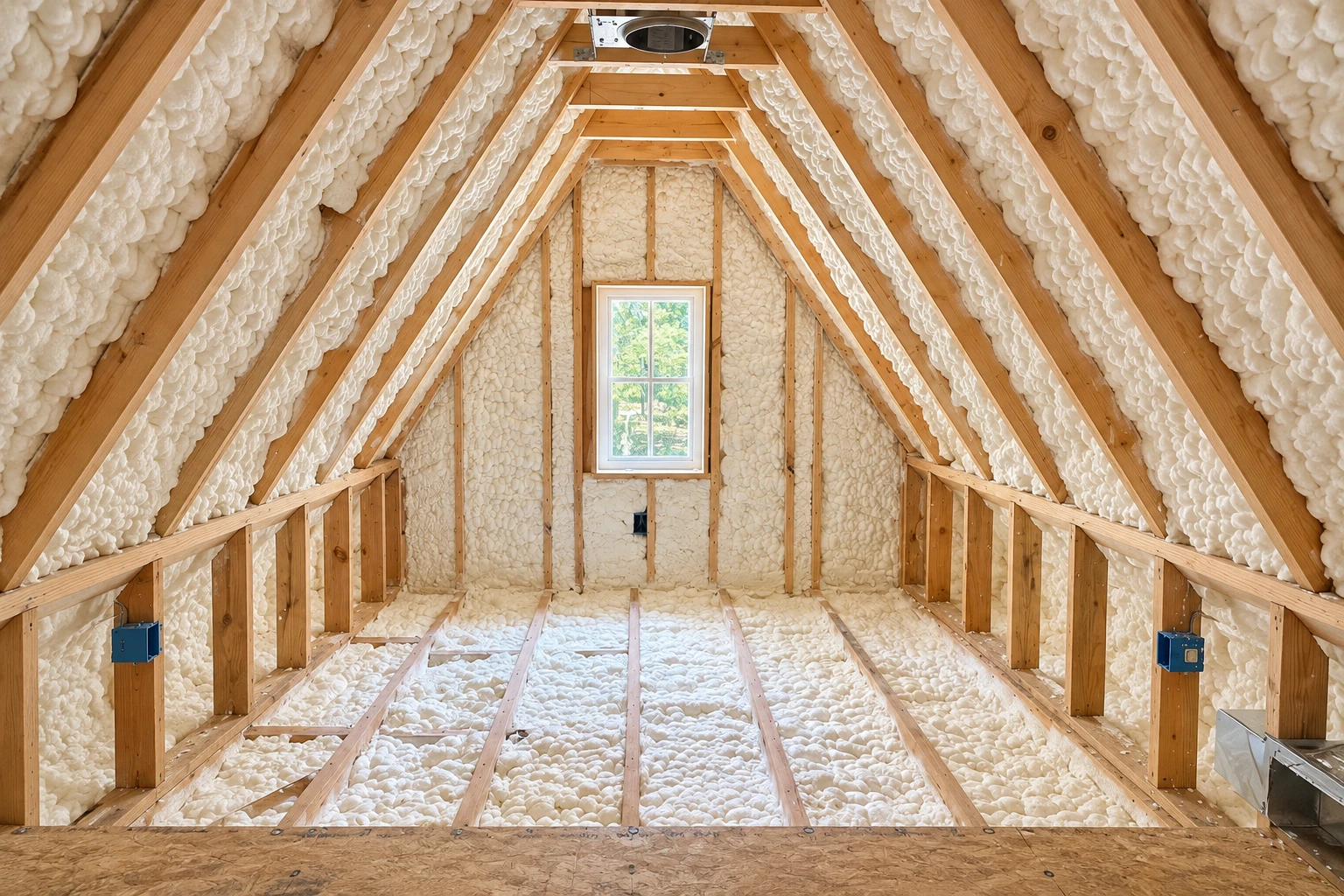
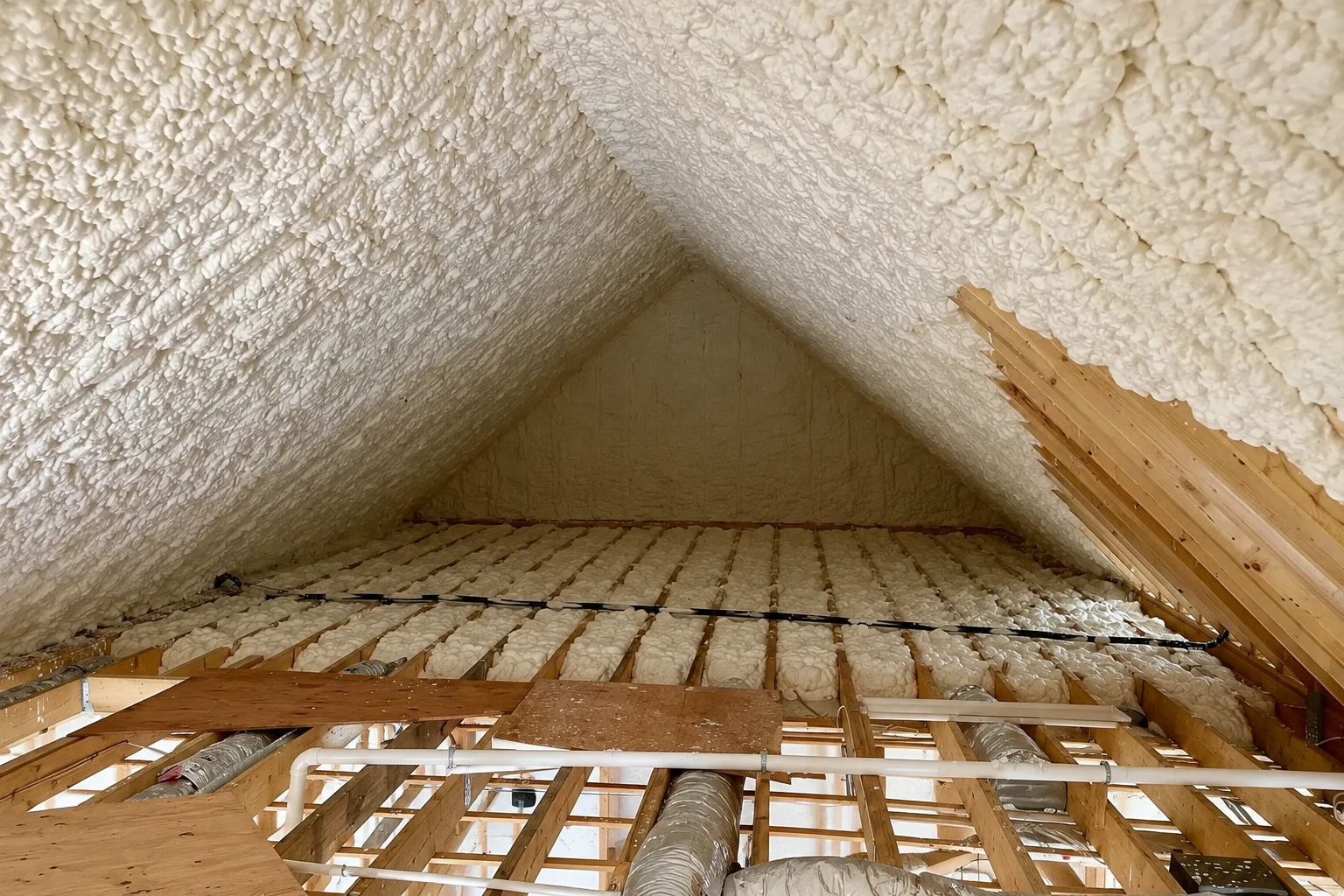
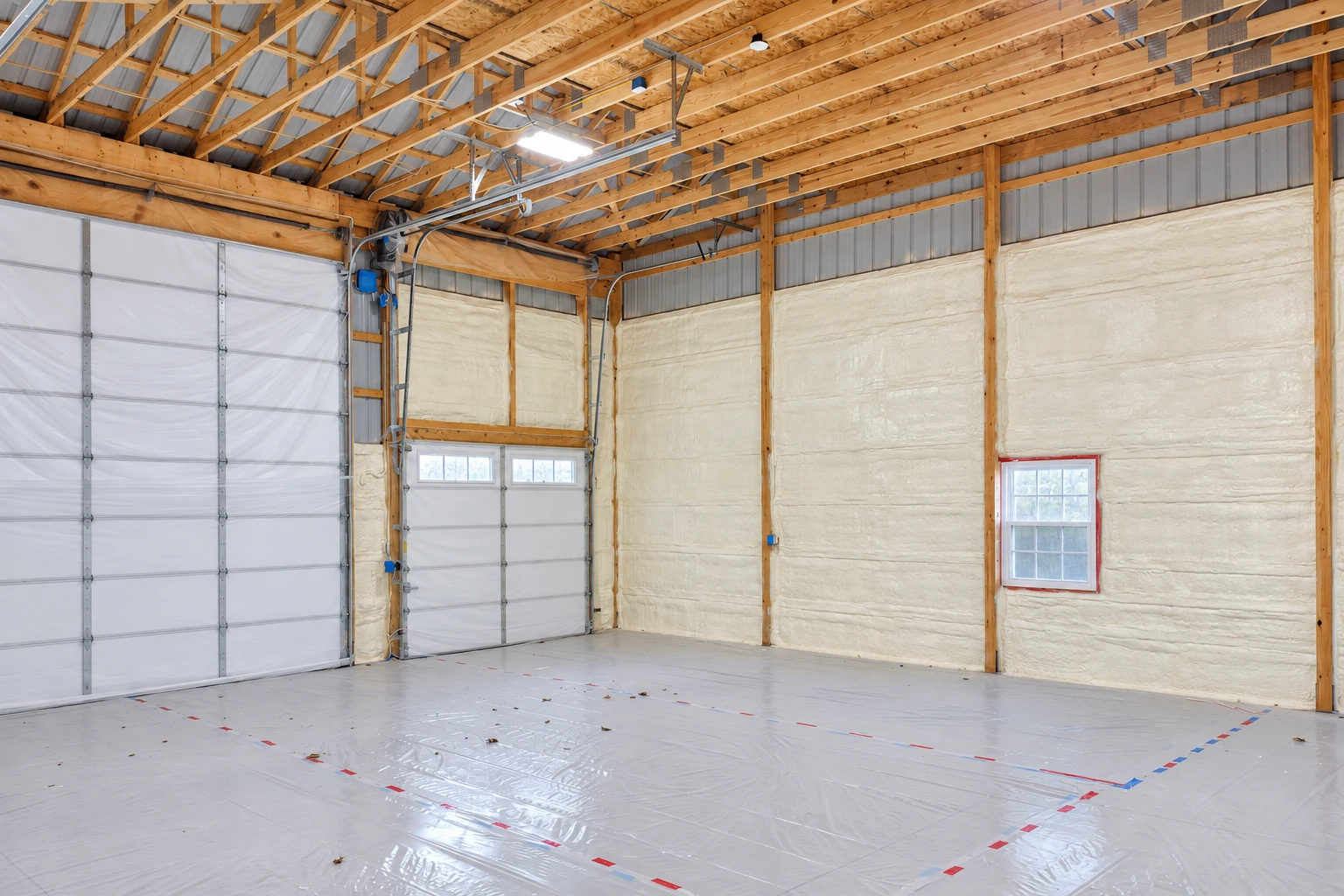
Closed-cell foam insulation is a dense spray foam that seals air gaps and holds back moisture while it insulates. In Santa Barbara we use it on crawl spaces, the framing along the edge of a floor and rooms over the garage, where softer insulation tends to sag or soak up damp.
Most people who call us about closed-cell foam have cold floors downstairs, a room over the garage that's hot upstairs in summer, or a crawl space that smells musty. The price mostly turns on how many square feet we're covering, how thick the foam goes, how easy the space is to reach and whether old batts need insulation removal first. The schedule turns on that prep, on any permit, and on the time your household has to spend away from home after we spray. The estimate gives you a written plan in the order the work should happen, with your own price.
How do you know closed-cell foam might help?
Cold floors downstairs
If the floors stay cold even with the heat on, outside air is usually getting in under the house along the edge of the floor framing. Until those gaps are sealed, the furnace keeps working against a draft and the power bill climbs every winter.
Musty, damp crawl space
A musty smell or batts hanging loose under the floor usually means the old insulation has picked up moisture and stopped doing its job. Leave it and the wet material sits against the wood, so the eventual fix gets bigger.
Hot room over the garage
A bedroom over the garage that bakes in summer usually has thin insulation and leaky air paths in the floor and walls it shares with the garage. The AC runs longer to keep up, and that room still never feels right.
Related foam and insulation work
Open-cell foam insulation
A softer, lighter foam that suits attic rooflines and interior walls when damp isn't the main concern.
Commercial insulation
Foam and other insulation for shops, offices and rental buildings, planned around tenants and working hours.
How we install closed-cell foam insulation
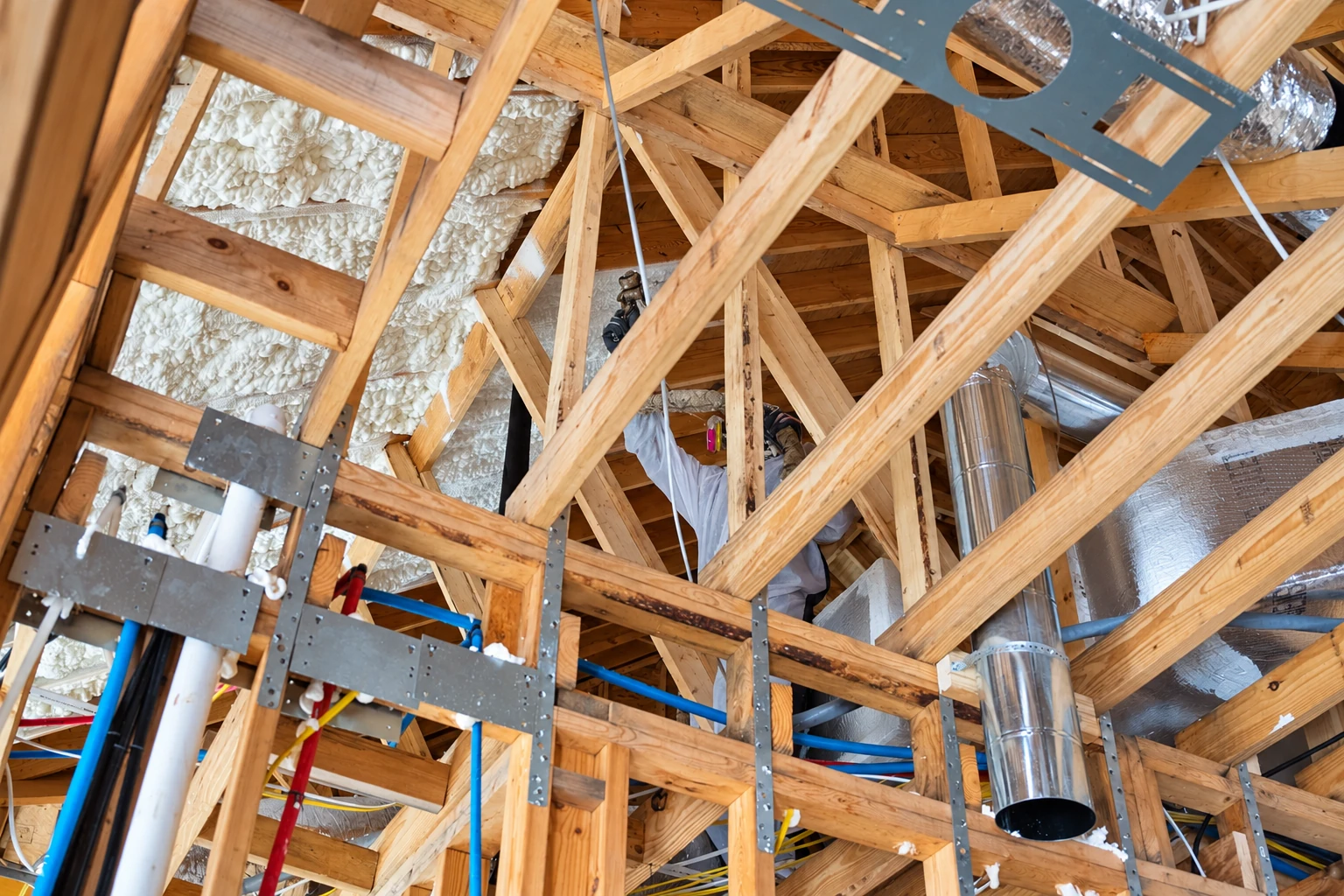
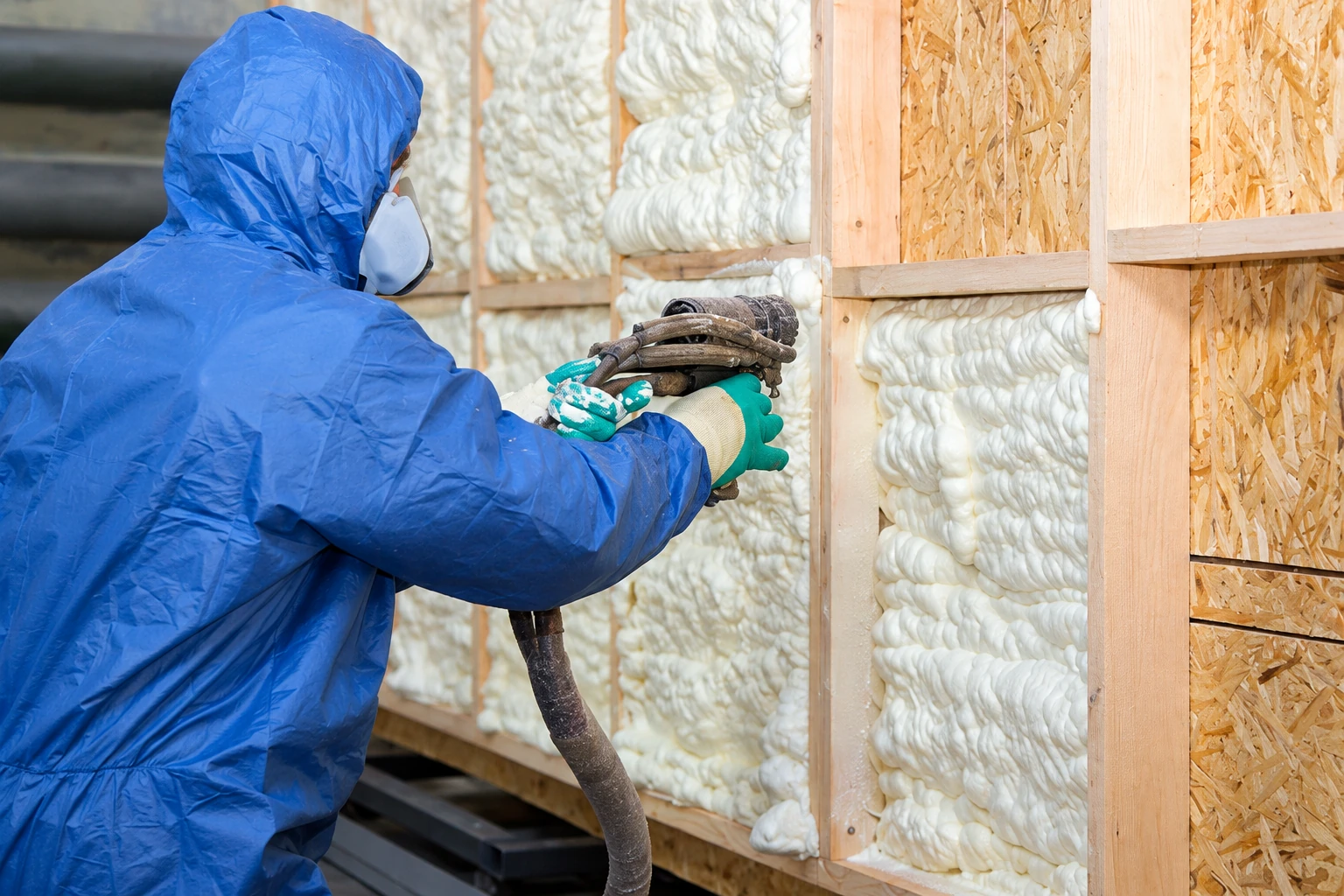
It starts at the first visit. If anyone at home has asthma, allergies or skin trouble, I want to hear it then, so we can talk about whether foam is the right choice at all before anything gets planned. When foam does make sense, we use closed-cell in the spots that need insulation that also holds back moisture. On work day our crew handles whatever has to come first, like pulling out soaked or dirty old insulation. Then we cover and protect the area, spray the foam in passes, trim it back where it's too thick, and clean up so the space is ready for the walkthrough.
Foam isn't always the answer, and I'll tell you when it isn't. It costs more than other insulation because it seals air while it insulates, and in a lot of attics sealing the gaps and topping up loose fill does the job for less, unless your ductwork runs up there. Where moisture isn't the worry, open-cell foam insulation is lighter and usually costs less. For property managers we plan commercial insulation around the people using the building.
Rim joists and crawl spaces
This suits homes with cold floors or a damp crawl space, because the foam seals the edge of the floor framing and keeps doing its job in a spot where batts usually get wet. It's where we use closed-cell most often.
Attic roofline with ductwork
This suits houses where the ducts run through the attic, because foam on the underside of the roof brings those ducts inside the insulated space. If your attic has no ductwork, sealing gaps and adding loose fill is usually the better value.
Get a closed-cell foam plan and a free estimate
Send the form and we'll reply within one business day to set up my visit. The estimate is free and there's no pressure to book. You can always call (805) 284-9538 instead.
Call (805) 284-9538Why Santa Barbara homeowners call us for spray foam
The owner does every estimate
I come out for the first look and the estimate myself, and I come back after our installers finish to walk the job with you. You're talking to the person who planned the work, so nothing gets lost between the visit and work day.
In business since 2017
Before I did the work myself, I spent years running the schedule for a busy company and learned the trade beside installers in attics and crawl spaces. That's why we plan every job in order, with leaks and old material dealt with before any foam goes on.
Licensed in California, insured too
The state licensing board treats installing insulation as its own contractor trade, so ask any installer about their license and insurance before they start. We're fully licensed and insured.
We find the right permit office
We work across Santa Barbara and the cities around it, including Goleta, Montecito, Carpinteria, Isla Vista and Ventura, and an address here might fall under a city, the county or the university. Before we book, we check which office covers yours, and when a permit is needed we apply, set up the inspections and tell you how they fit your schedule.
On a foam job, the order of the work matters most, because foam sprayed over a problem has to be cut back out. Get in touch and I'll come take a look.
What happens after you call about closed-cell foam?
Call, email or send the form
You reach us however's easiest, and we set a time for me to come out. Mention anyone at home with asthma or allergies so I can plan the visit around it.
I look at the space
I check the area, the old insulation and anything that has to be fixed before foam goes on, like a leak or wet framing. You get a written plan with the order of work and your price, so you know exactly what you're agreeing to.
We book it and plan your time away
Once you say yes, we sort out any permit and book the work in the right order. Because your household stays out during the spraying and for a while after, we pick a date that gives you time to line up a place to stay.
We walk the finished job
Our installers do the work, clean up and leave the space ready. Then I walk through it with you and answer anything you still want to ask.
Common questions
How much does closed-cell spray foam cost in Santa Barbara?
In Southern California, closed-cell spray foam for 1,000 square feet at 3 inches thick usually costs about $3,100 to $4,700 per job. That's a regional going rate, not our price, since there's no figure just for Santa Barbara. Your own number depends on the size, thickness and prep we covered above, and you get it from the estimate after I see the space.
How long does it take before we can go back inside after spray foam?
Safety guidance from the Consumer Product Safety Commission says to stay out of the house during the installation and for at least 24 hours after. Plan a place to stay for that stretch. Before work day we'll go over the safety steps and your re-entry time, which is when you, the kids and the pets can come back.
How do I know if spray foam is safe for someone with asthma?
It may not be the right choice. Federal safety guidance says people with asthma, respiratory allergies, skin conditions or a past reaction to isocyanates, one of the foam's ingredients, should read the product information carefully and consider other insulation if needed. That's why I ask about it at the first visit, and blown-in insulation or other options are on the table if foam isn't a fit.
Who issues building permits in Santa Barbara?
The city's Building Counter & Plan Review issues building permits, which the city generally requires when you build, alter, replace, repair or improve a building. The counter also gives the public guidance on building questions, so you can take yours there. State energy rules for walls, roofs and floors depend on the climate zone a building sits in, which is part of why insulation requirements differ from place to place.
What is closed-cell foam insulation?
Closed-cell foam is a rigid spray foam that's much harder to compress than softer insulation, and it insulates at about R-6 per inch. R-value is how well insulation slows heat. Being that dense is why it holds its shape in tight spots like the edge of a floor.
Does closed-cell foam keep moisture out?
It holds moisture back well. National guidance from the Department of Energy says closed-cell foam won't absorb water and, at typical thickness, acts as a vapor retarder, a layer that slows damp air moving through. It won't fix a leak, though, so we find and fix the source of the water before we spray.
Book your closed-cell foam estimate today
Call (805) 284-9538, email sales@insulationsantabarbara.com or use the form, and have the rough square footage, where you'd want the foam and any health concerns at home ready, so the first visit covers what matters.